


Rachael Brooke | Phillips-Rooks District Extension Agent | Agriculture and Natural Resources
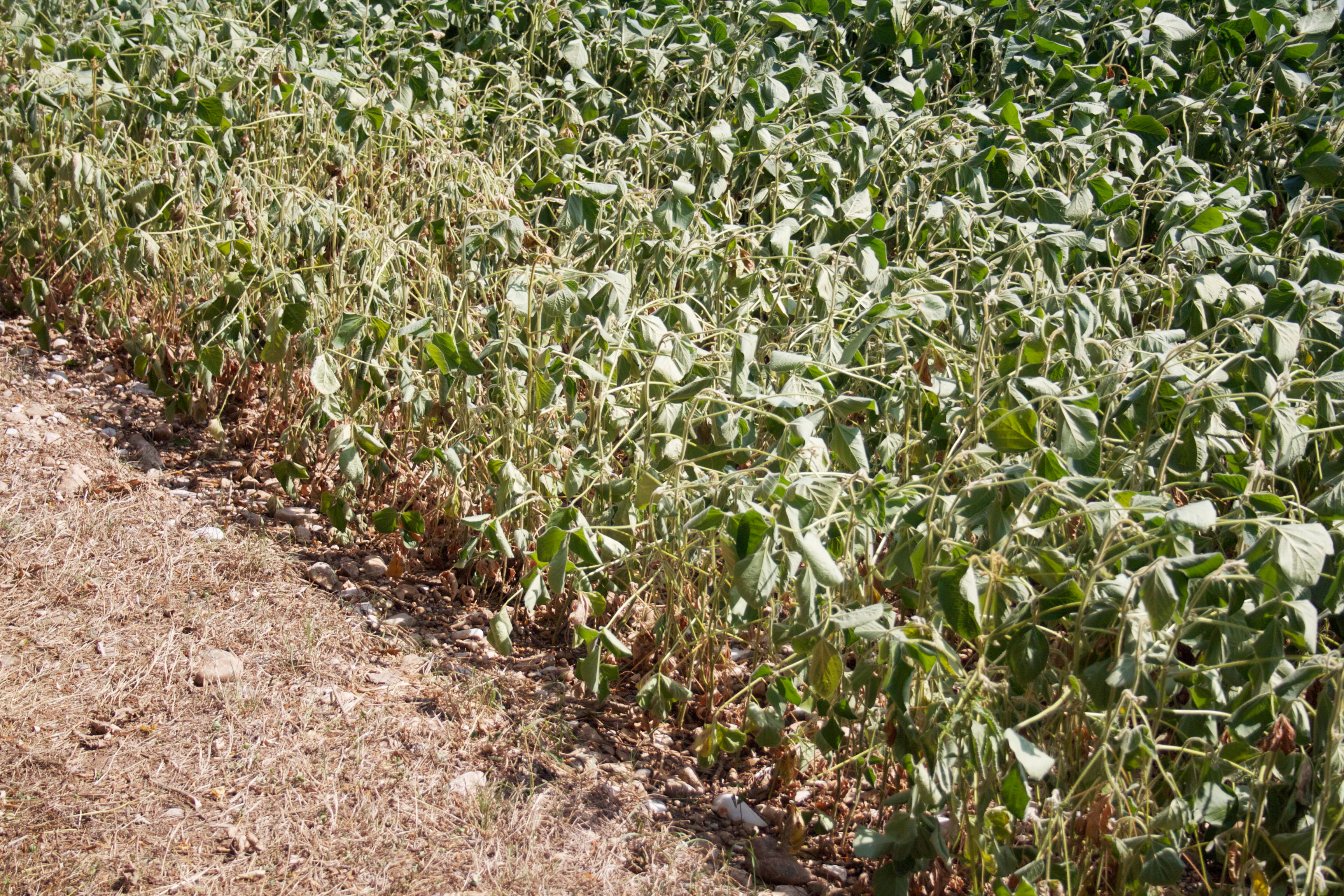
Prolonged heat and drought stress can cause considerable leaf area loss and soybean yield reduction. If the crop is so drought-stressed that it’s losing leaves or not setting pods, it may be time to cut it for hay. This might have appeal for livestock producers who are facing dry pastures and supplemental feed costs. The decision depends on the stage of growth and condition of the plants. If possible, it’s best to hold off on making any decisions about cutting soybeans for hay until the plants are moving into seed fill (the optimal time to cut beans for hay to retain digestible nutrients).
However, holding off until this stage of growth may not be possible if plants in the vegetative stage are dropping half or more of their leaves already. If too many leaves have dropped, the crop has a reduced value as a hay crop. Producers may need to make the decision to cut for hay while the plants are still in the vegetative stage, before the beginning seed fill stage, and before the soybeans lose too many leaves. Soybean plants that still have 30 percent of their leaves can produce 0.75 to 1.25 tons dry matter of hay per acre, with about 13 percent protein and 48 percent in-vitro dry matter digestibility. The more leaves a plant has, the more hay tonnage it will produce.
The “grey area” is where there are plants with 30 to 50 percent of leaves remaining since those leaves have the capability of filling pods if it rains and of making a soybean harvest that is worth more than the price of the hay.
Herbicide applications made during the growing season are an additional concern that has been raised by farmers. A herbicide label is the law, and many herbicide labels do restrict the use of soybeans as a forage.
For more information, please contact the local K-State Research and Extension Office.
K-State Research and Extension is an equal opportunity provider and employer.